Why Students at Hunter College Think The School Opened Too Soon
Students at Manhattan’s Hunter College were cautiously walking up the ice covered steps, after CUNY announced that in person classes would resume two days after record breaking blizzard hits New York City.
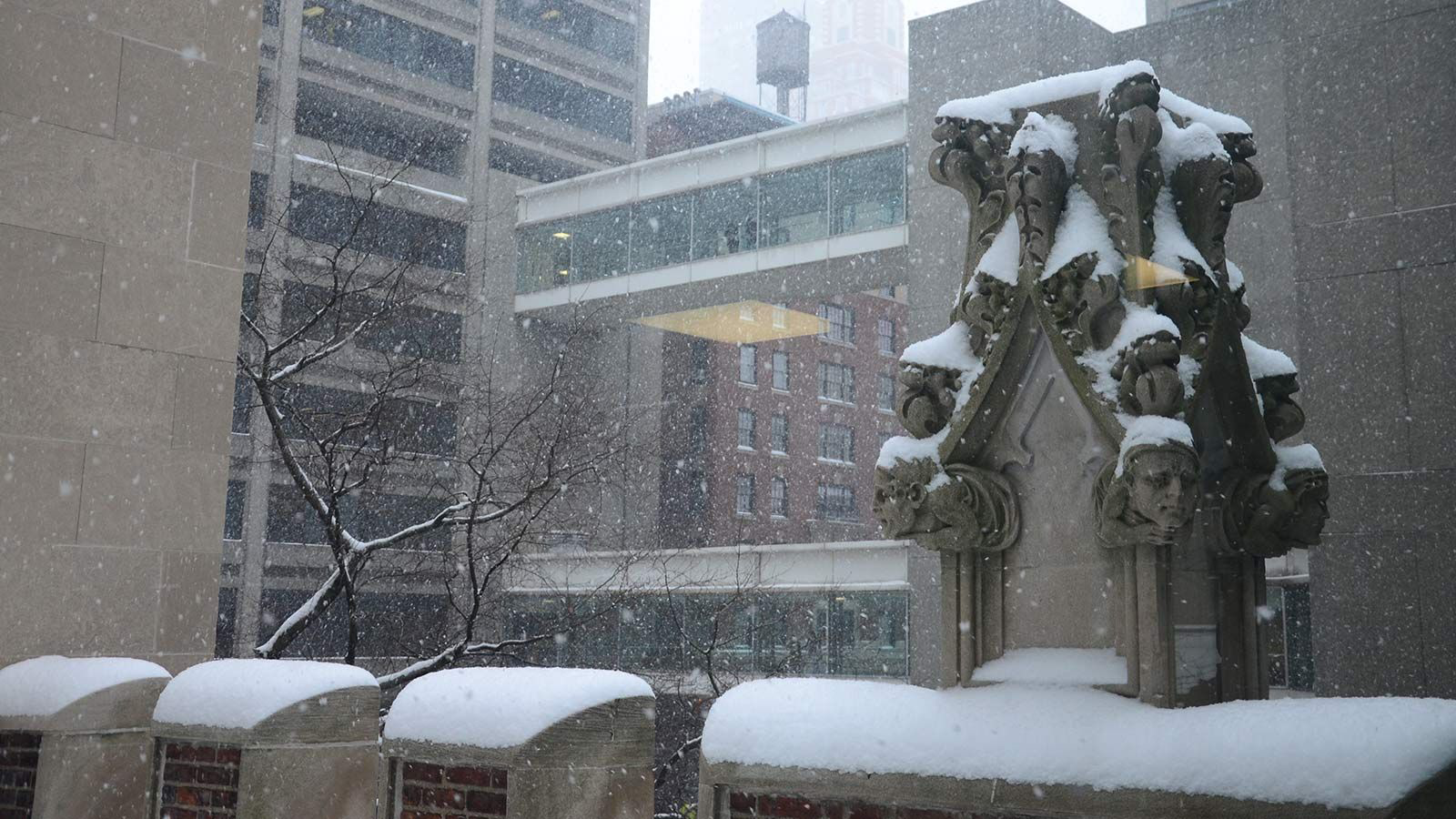
Universities were set to return to in person learning classes after one more day of remote learning, CUNY announced on social media on Monday. The blizzard took place from February 22 to the 23 and the snow’s height got up to 19.7 inches in Central Park, which would make it the ninth most inches of snow in Central Park’s history, according to The National Weather Service. Many students at Hunter College criticize the Public Safety and Communications team’s decision to resume in person learning, citing the different trials and tribulations in the way of just simply traveling to their university.
“I couldn’t travel at all. I couldn’t take the train because I live really far and the trains were not in service” Ansel Parradl, a student at Hunter College, said when describing his attempt to commute after the blizzard in New York City. “I actually fell and hurt my knee and my hand”. Ansel Parradl had to travel nearly 20 miles from Coney Island to get to his school, Hunter College, in Manhattan. Normally, that commute would take about a little bit over an hour, but after how bad the storm was it took Parradl about 2 hours, which is about double the time it would take normally. “I did feel like Wednesday, it should have been remote”.
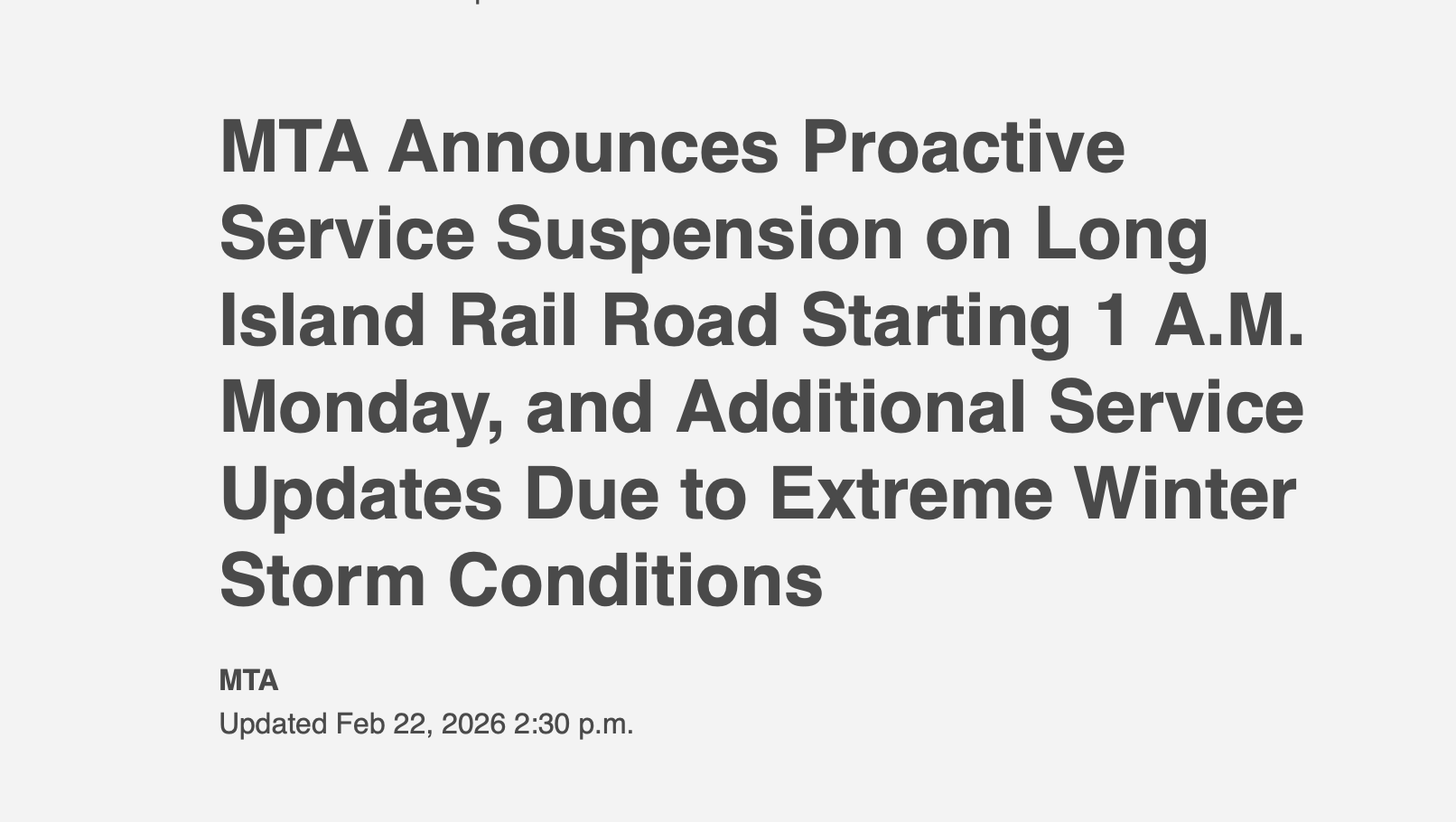
Travel delays were shared by many students across New York City, as Bronx resident and Hunter College Student, Solomon Kumi knew far too well. “There were a lot of delays on the train. I had to take a shuttle bus to go from one stop to another. It made no sense”. Kumi felt frustrated at the delays and lack of clean up across New York City and in his neighborhood specifically, which could be contributing to the congestion in pedestrian areas. “There wasn’t really no cleanup. These guys are lazy. They’re just leaving the snow out there, waiting for it to rain or something for it to melt”. The blizzard had undeniably made it much more difficult for students to get around, if they could at all without spending their own money to get to class.
While students may be quick to opt for remote learning over in person classes, Solomon Kumi carefully weighs both options and acknowledges that it is a tough decision. “I feel like it should have been remote. But at the same time, the snow wasn’t really that bad. It’s like 50-50”. Solomon Kumi is right that the issue isn’t as simple as some may make it seem. Professors and Teachers know how detrimental last minute cancellation and snow days can be to their lesson plans for the semester. One snow day means one full day from the syllabus getting cut, and that time has to go somewhere.
“Remote instruction requires a change in delivery,” a professor at Hunter College in New York City, Chelsea Forugini, said when discussing her opinions on remote learning. “When we gather together, and it’s consistent, we have a norm for gathering and then when we get online, it can be difficult for everybody involved to kind of shift our attitudes about being with one another”. Online classes can cause a noticeable disruption in even the vibe of the class, which could result in a less efficient workflow.
The Hunter College professor, Chelsea Forugini, explained how she teaches a workshop for an English class, where it is necessary that the students interact with one another for the class to be able to have good discussions or debates to drive conversation and the classroom and to receive good feedback on peer reviewed writings. She added that, “showing up and being present” is a core fundamental to the point of the class. Dr. Forugini reveals that the sudden change from in-person classes to online, can make it much more difficult to replicate the same environment on a zoom call, that you would inside a classroom or real life discussion.
Contacting the university’s public safety and communications team could result in uncovering the ultimate reason for the decision to resume in-person learning at Hunter College a couple days after the near 20 inch snow storm, the assistant vice principal of student affairs and enrollment at Hunter College, Joseph Fantozzi said. Later, the assistant vice president of communications and marketing, Vince Dimiceli, was reached out for comment, and stated that he would give a quote but never returned with a statement or explanation as to why the school opened when it did or why the university decided to do in person classes opposed to remote learning.
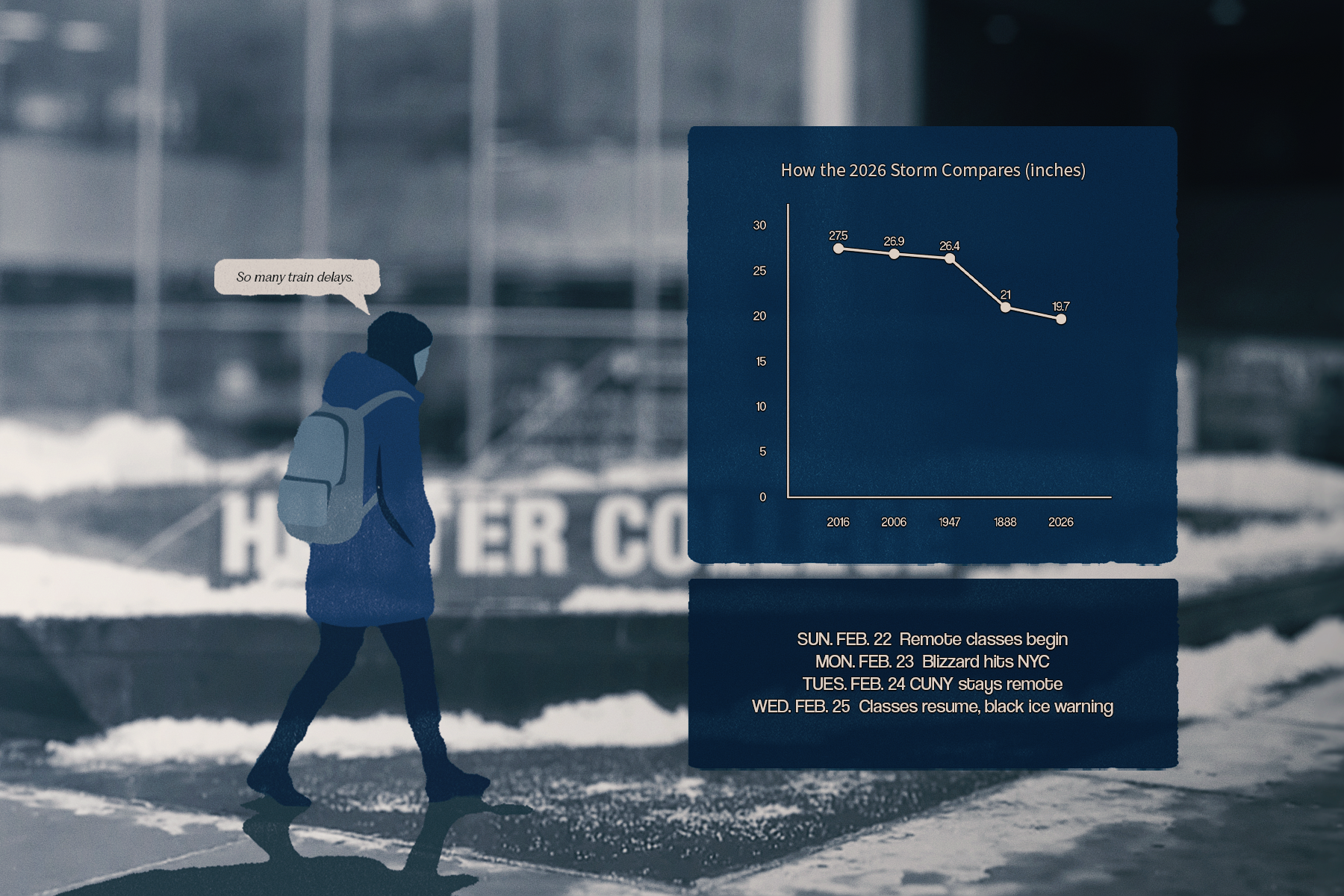
The debate over whether to reopen Hunter College reflects a broader issue taking place at different universities. While elementary schools are pushed to stay open, for one big reason, to give free child care for working parents. However, for university and college students there’s more to consider. The decision after a snow storm to either open classes in person or do it online will result in individuals not being happy. For students, it is difficult, dangerous, and costly to travel to school during such weather conditions. Some students had to pay for special buses or Ubers to get them to school, while others faced massive delays on public transit resulting in long waits and lateness. However, the decision is not that clear cut. Teachers face setbacks and feel like their lessons are significantly more ineffective while online because the communication is not there with teachers and students. When students are on a zoom call, there’s a big disconnection when nobody is face to face resulting in teaching that is less effective.